Metaphysical Thresholds
24 april–7 juni 2026
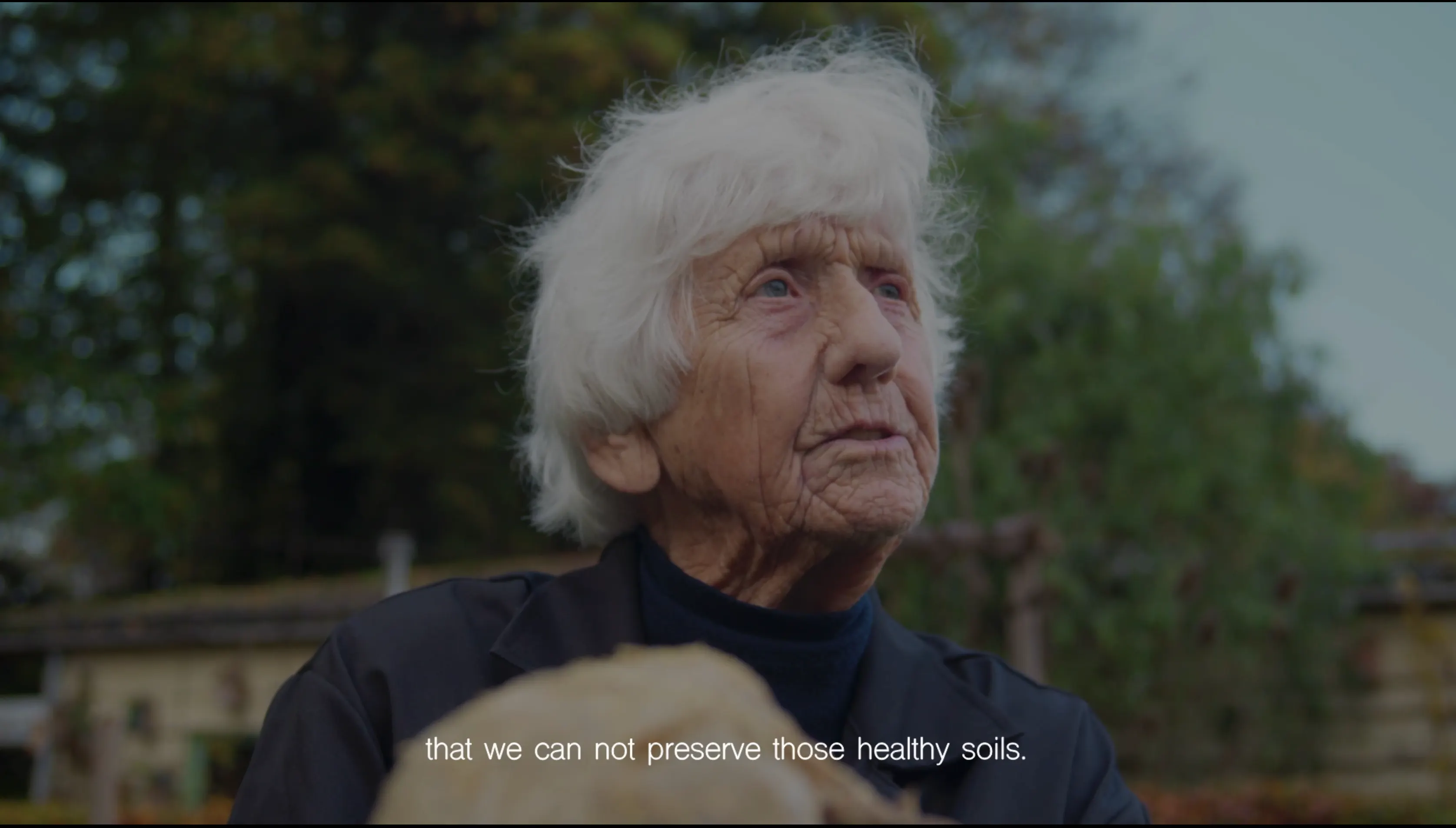
Metaphysical Thresholds brings together the work of two artists who, despite having different backgrounds, both look towards their respective grandmothers' legacies, beginning with the plants both women nurtured. Curated by Natasha Marie Llorens, this exhibition takes a critical perspective on the ecological turn in the arts with artwork that figures forth long-standing and geographically divergent practices of gardening as an established metaphysical practice. Yoeri Guépin and Hichem Merouche present a video work, a scent-based installation, and community interventions that recenter the esoteric dimension of the natural world and plant-life in politically engaged artistic practices.
In this exhibition, plants have multidirectional agency, meaning that while the actual living things Guépin and Merouche work with are rooted in the ground in a physical sense, the plants encountered in both installations also stand symbolically at the threshold of human encounters with death, spirituality, intergenerational transmission and eco-social crisis.
For Guépin and Merouche, human transformation consists of decay and regeneration: core processes that parallel natural cycles. Guépin’s biodynamic cosmology and Merouche’s reflection on burial practices create a poetic and critical encounter across nationalisms and faiths.
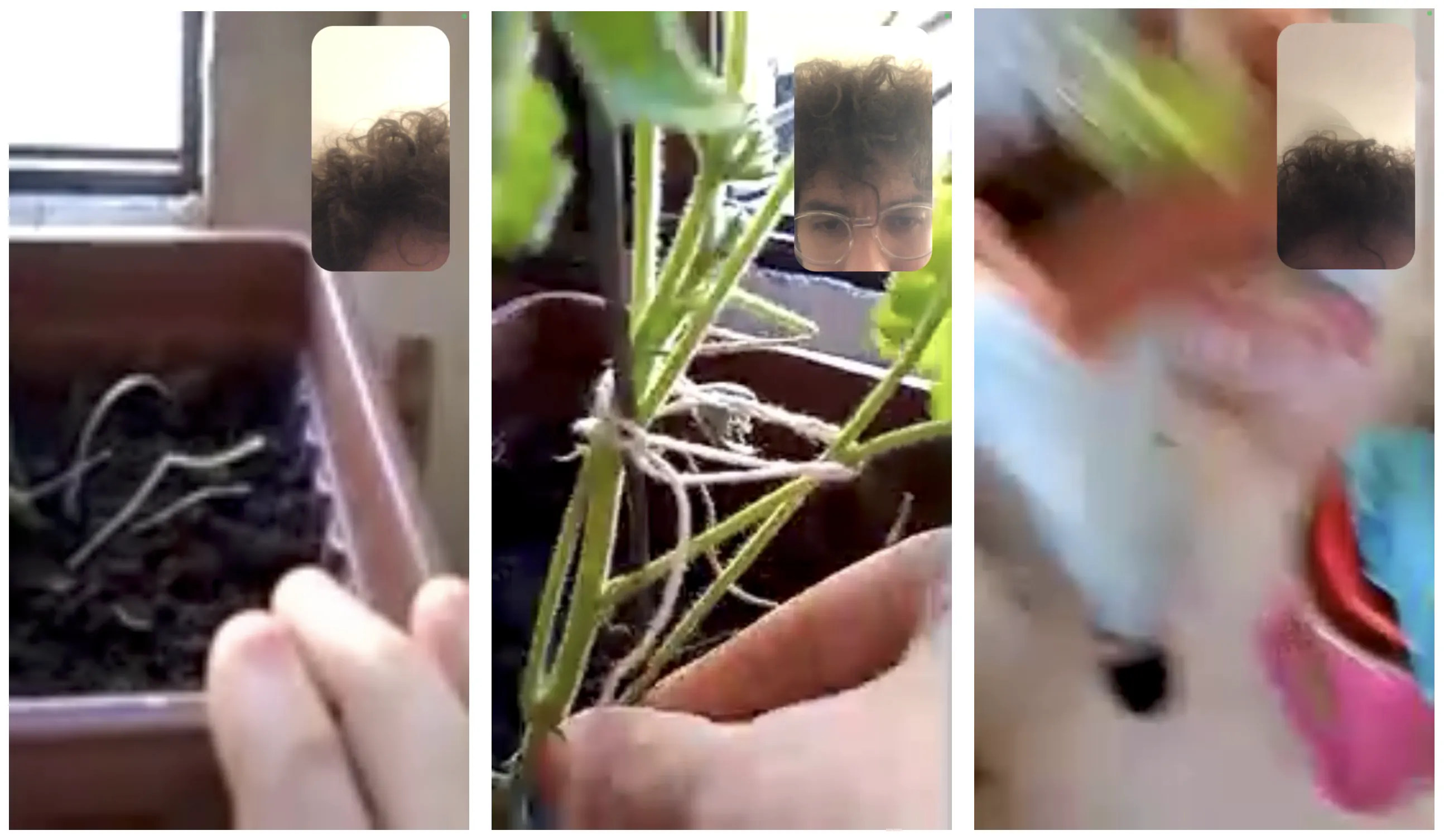
Guépin’s video installation, “As Above So Below”, evolves from his long-term engagement with the biodynamic agricultural practices of his grandmother, Wilfriede Driehuyzen Guépin, a pioneer of organic farming in the Netherlands. Through her handwritten notes, oral histories, and filmed conversations, the artist reconstructs a marginalized worldview that recognizes the agency of plants and the cosmic dimension of farming. The idiom “as above, so below” anchors the project in Hermetic and alchemical traditions, in which earthly processes mirror celestial ones.
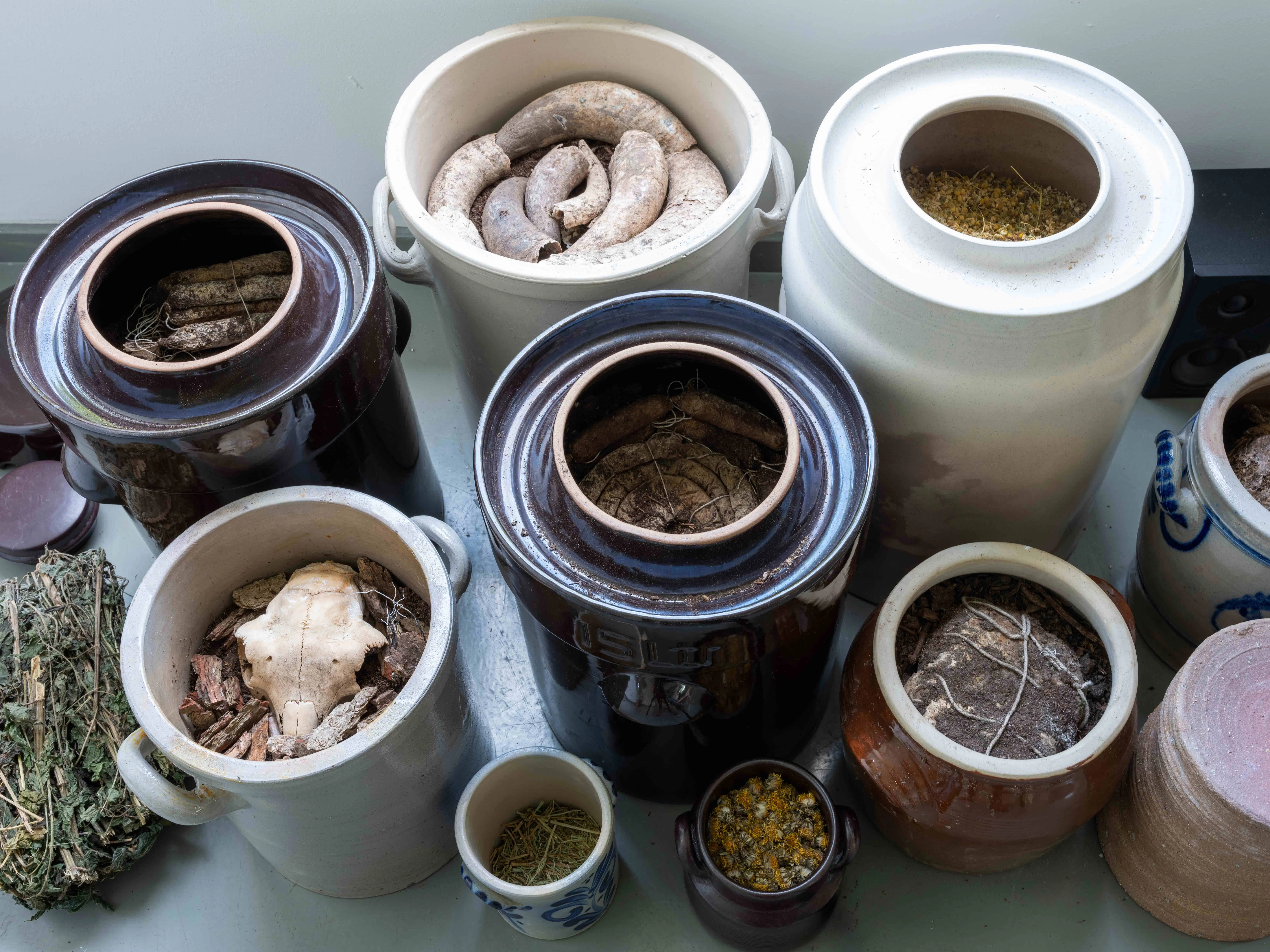
Merouche presents an installation commissioned by Llorens and developed over two years of dialogue entitled “rīḥa” – ريحة” In colloquial Algerian Arabic, rīḥa holds two meanings, scent and memory. The work’s central element is essence of the Pelargonium Graveolens distilled using techniques local to Merouche’s hometown Annaba and disseminated in the gallery of Konsthall C. The scent invisibly carries the weight of the Merouche family history of dispersal across Algeria and abroad, and the forces that sustain kinship.
About:
Yoeri Guépin (b.1983, Zeist) is an artist, researcher, and gardener based in the Netherlands. Through films, workshops, lectures, communal gardening projects, and field trips, his practice responds to injustice and systems of marginalization. His current work engages with the repercussions of industrialization on farmers and their ecosystems through the lens of his own embodied experience of being raised in several organic-farming communities. His experience of being brought up in biodynamic farming communities, helping his parents in the fields from a young age led to an interest in (agri)cultural histories. Guépin holds an MA from the Dutch Art Institute. His work was nominated for the Dolf Henkens Prize (2023) and shown at A Tale Of A Tub in Rotterdam (2023), the Sharjah Biennale (2023), and Kadist San Francisco (2022). In 2024, he was a resident at the Jan van Eyck Academie in Maastricht.
Hichem Merouche (b.1991, Tunis) is an artist living and working between Algeria, Tunisia, and Greece. Merouche's practice brings together film, sound, photography, text and found objects in installations rooted in personal history and Mediterranean landscape, and where external agents — bureaucratic, natural, or social — are active participants in shaping the work. Merouche’s first solo exhibition "Friendly Islands”, opened at Rhizome, Algiers (2023). His work was shown in: The Possibility of Not Having Been, Santa Monica Art Center, Barcelona (2023); En Attendant Omar Gatlato: Epilogue, Le Magasin, Grenoble (2023); Archives des luttes de femmes en Algérie, Documenta 15, Kassel (2022); and FIDMarseille, France (2018).
Natasha Marie Llorens (b. 1983, Marseille) is a Franco-American curator, arts writer and Professor of Art Theory at the Royal Institute of Art Stockholm, and co-director of the Center for Art and the Political Imaginary. Recent curatorial projects include Massinissa Selmani: 1000 Socialist Villages at Index Foundation in Stockholm and rhizome gallery in Algiers, and En Attendant Omar Gatlato: Epilogue at the CNAC Magasin in Grenoble,. She won the Andy Warhol Arts Writers grant in 2022 and publishes regularly in Art Papers, e-flux Criticism, and frieze, among other international art publications. Currently, Llorens co-leads a long-term artistic research project with Myriam Amroun on decolonial curatorial methodology and minor transnationalism. Llorens holds an MA from the Center for Curatorial Studies at Bard College, and a PhD in modern and contemporary art history from Columbia University.
Public Program:
April 24th 2026, 18:00 - 21:00
Vernissage
18:30 - Introduction to the exhibition by Natasha Marie Llorens
19:00 - Performance and discussion with Saleh Abdelaziz and Maya Abdullah, translators of a reflective chronicle on Merouche’s process of making the olfactory element of the installation presented by Mohammed Salah Arabi.
About the speakers:
Saleh Abdelaziz is a translator, writer and graduate student in philosophy at Södertörn University. He is also a member of Kollektivet Jordens Fördömda, a Stockholm-based writing and activist collective engaged in popular education on colonialism and imperialism.
Maya Abdullah is a writer, translator and journalist. She also holds a Master’s degree in Law. Her work is focused on literature, racism, migration, coloniality and decolonial practices.
June 6th 2026, 14:00 - 18:00
Yoeri Guépin will host a participatory workshop on plant-based rituals of care and healing, extending the guiding ethos of Guépin’s practice, knowledge transmission through embodied practice. Registration required.
Credits:
Hichem Merouche’s project was produced with the support of the Arab Fund for Arts and Culture (AFAC), the Culture Resource (Mawred)’s Wijhat program, and Rhizome, Algiers. Yoeri Guépin’s installation was made possible in part through financial support from the Mondriaan Fund.