MESSIAH
2 oktober–15 november 2026
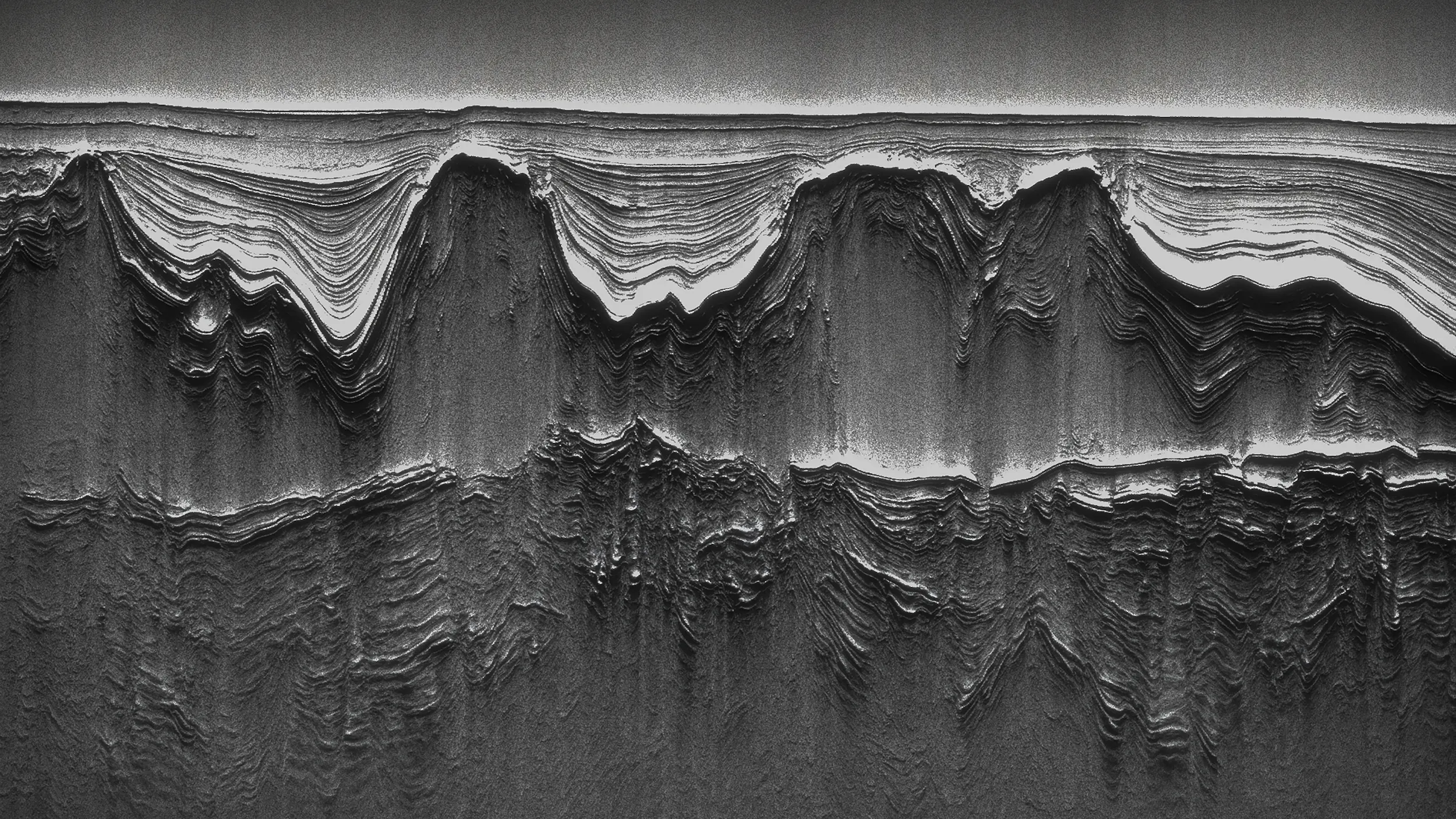
In 2006, artist Clara Ianni entered the Fine Arts program in the Universidade de São Paulo, Brazil. The same year, Petrobras, the Brazilian national oil company, prospected one of the largest oil basins in the world: the Pre-Salt Layer. Situated all along the coast, it is currently valued somewhere between $3.5–8 trillion USD. The discovery of oil promised a future of prosperity for a country riddled with poverty and structural inequality, generating hope that newfound economic abundance would benefit everyone. This promise went unfulfilled.
Twenty years later, Clara Ianni reflects on the consequences of this discovery in a newly-commissioned exhibition, MESSIAH. The artworks presented draw on religious allegory to illustrate the economic, political, and ecological implications resulting from the extraction of the Pre-Salt Layer. Ianni invokes the symbol of the messiah, or savior, to describe the effect of oil discovery, which provided an economic promise that could “save” the country. Instead, Brazil underwent an era of instability and tumult, including US-led foreign intervention and a coup d’etat, followed by economic collapse, austerity measures, and environmental destruction. These events led to an almost-apocalyptic exhaustion of society.
Following the messianic and apocalyptic metaphors, Ianni also utilizes the notion of resurrection to think about the relationship between the present moment of exhaustion and deep time. Instead of the human figure of Christ, here, the resurrection alludes to the resuscitation of the earliest life forms: plants and animals that have been buried beneath the earth’s surface for millions of years. These fossils, which are drilled, mined, extracted, and burned, provide energy that sustains our present.
The exhibition begins with a verse from the Book of Revelation, the last book of the New Testament, which describes the apocalypse. This text gives way to a deep, sonic reverberation that lies at the core of the exhibition: a musical composition made with the same acoustic technique used in the discovery of the Pre-Salt layer. This technique is called infrasound technology, and employs low-frequency sound waves to explore and map deep-oil reserves. Inaudible to human ears (below 20 hertz), infrasound waves can travel thousands of kilometers beneath the Earth’s surface. By recording the same sonic infrastructure used in oil extraction with human voices, Ianni reflects on the personal impact of extractivism, exploitation, and profiteering. Sung by a choir of voices in Brazil, the piece emerges as a requiem.
The sound piece accompanies a video animation of the Pre-Salt layer, rendered from seismic images found in a sales report about the basin. This work depicts subsurface topographical layers based on data collected through the infrasound acoustic emissions. In this process, visual maps and surveys are produced by sound itself.
These prospective images are taken further in a series of photogravure prints entitled “INFRA/ULTRA,” in which the same infrasonic renders are collaged together with ultrasound scans. This work intertwines images produced of things unseen, both underneath the earth and inside the body, alluding to the interdependency of human beings and the environment.
Altogether, the works contribute to Ianni’s pre-existing inquiries into the relationship between image making and extractive economies. Here, invisible, industrial machinations are made audible and visible, allowing sensory access to otherwise abstract, distant phenomena. By placing the work in a lineage of theological figurations, the artist brings a religious lens to the most politically, economically, and ecologically influential substance of the modern era: oil.
MESSIAH marks the penultimate exhibition in the Sacred Spaces artistic program at Konsthall C, which engages artistic practices that address questions of religion and society.
About the artist:
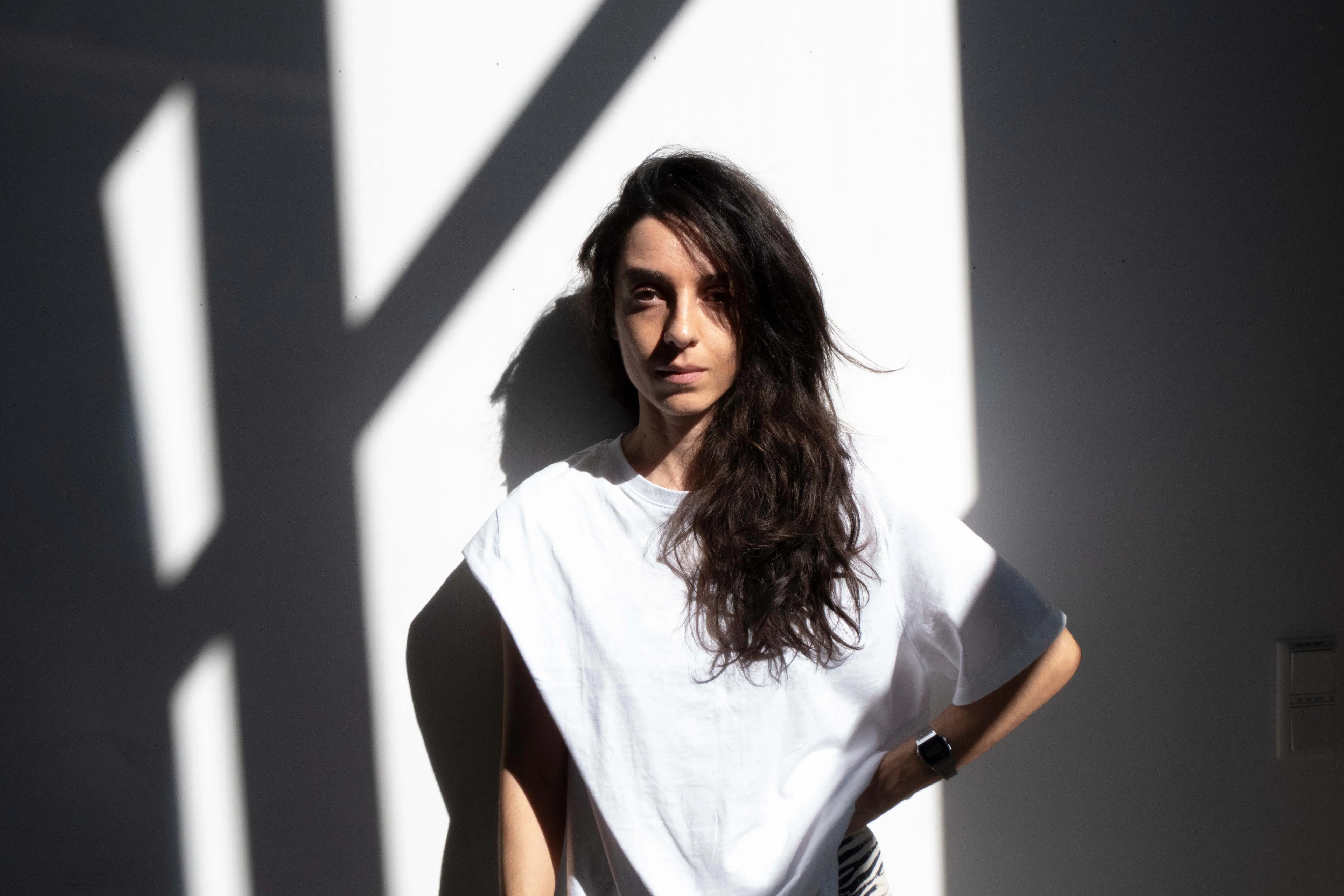
Clara Ianni was born in São Paulo, Brazil. Working across video, installation, sculpture, and drawing, her work develops critical approaches to dominant historical narratives, power structures, and institutional frameworks - including those within the art field - while also proposing alternatives.
Born two years after the end of the military dictatorship in Brazil and raised amid the transition to neoliberal globalization, Ianni’s background drives her interest in how history and politics intersect. She often bridges micro and macro-histories in order to explore the paradoxes of modernization and the links between progress and myth, with a particular focus on labor, extractivism, and ideas of the future.
Process-oriented and research-based, her practice draws on strategies from conceptual art and institutional critique. Both employing and questioning the role of art, her projects are characterized by synthetic gestures, bringing together conceptual, affective, and sensory dimensions.
Ianni holds a PhD in Visual Arts from the University of São Paulo, an MA in Visual and Media Anthropology from the Freie Universität Berlin, and a BFA in Visual Arts from the University of São Paulo. Among others, she had solo shows at MASP, Brazil, (2026), and Amant Foundations, New York (2021). Her work has been presented at the New Museum Triennial (2021), the 34th São Paulo Biennial (2021), the 21st Videobrasil (2019), Utopia/Dystopia – Part I at MAAT, Lisbon (2017), the Jakarta Biennale (2015), Fire and Forget, KW, Berlin (2015), the 31st São Paulo Biennale (2014), the Yebisu International Festival for Art, Tokyo (2015), the 33rd Panorama of Brazilian Art (2013), and the 12th Istanbul Biennial (2011). Her residencies include HBK Braunschweig (2025), IASPIS, Stockholm (2024), the Jan van Eyck Academie, the Netherlands (2022–2023), the Delfina Foundation, London (2018), Darat Al Funun - Khalid Shoman Foundation, Amman (2013). Her awards include the Werner Fenz Prize, Austria (2024), and Videobrasil Awards (2016).
She has also worked as a curator, including developing the program Contraritual (2016–2017) as part of The Future of Memory – Memory and Forgetting in Latin America, in collaboration with the Goethe-Institut and Casa do Povo. She co-curated Carretera al Mar (2018) with Museo La Tertulia and the Goethe-Institut in Cali, Colombia, worked as assistant in the 7th Berlin Biennale (2012), and as an intern and assistant of Regis Michel at Louvre Museum (2008-2009).
This exhibition is part of the Scales collaboration, a rotating exhibition initiative connecting and exchanging programs across four Nordic art platforms: All all all (DK), Konsthall C (SE), Kunsthall Oslo (NO), and PUBLICS (FI).